


Cable!Vision International3/2024
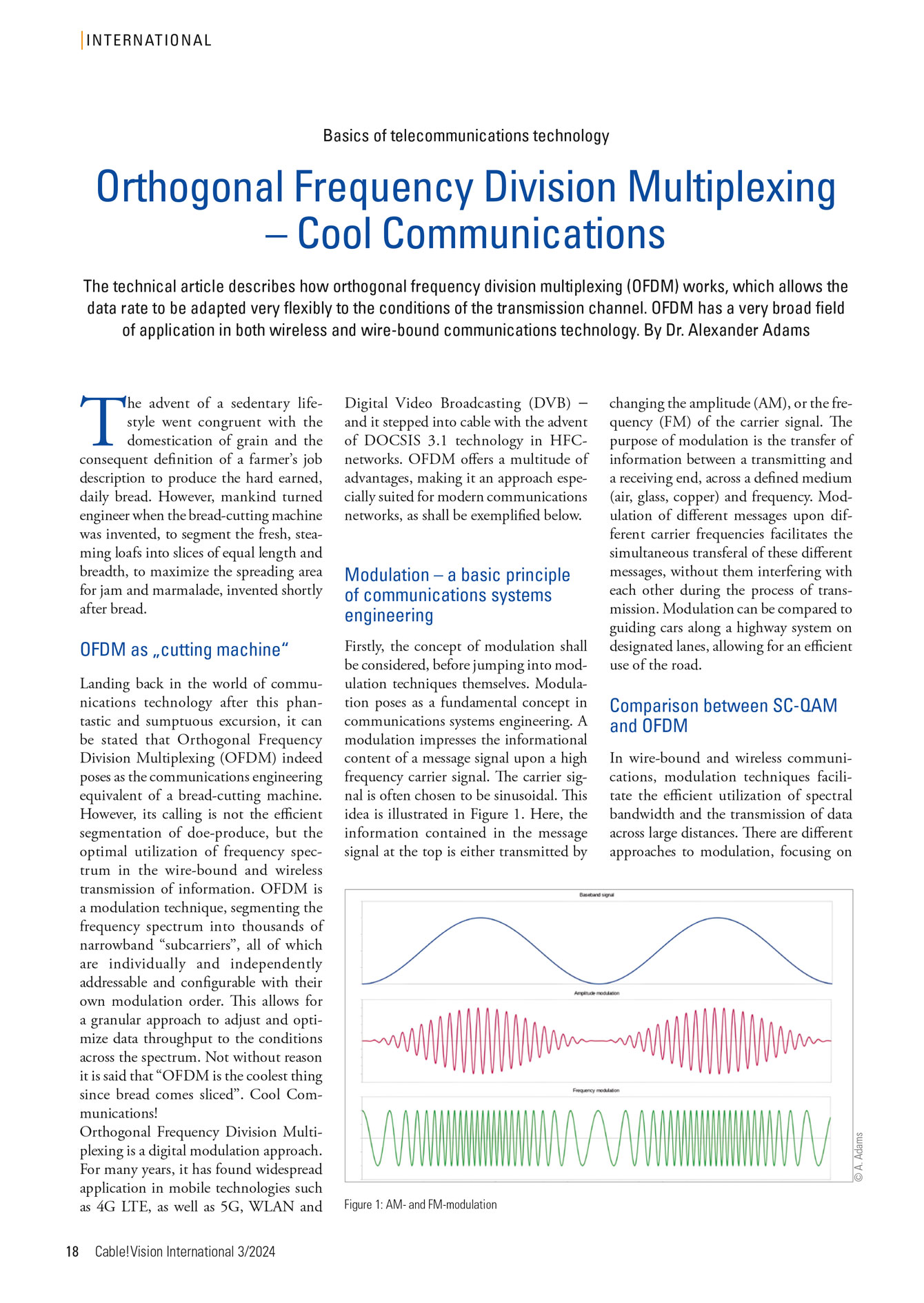
Orthogonal Frequency Division Multiplexing – Cool Communications
In the world of communications technology, Orthogonal Frequency Division Multiplexing (OFDM) is a groundbreaking technique that has revolutionized the way data is transmitted. This digital modulation method, which is based on the division of the frequency spectrum into numerous narrowband subcarriers, offers exceptional flexibility and efficiency. In the technical article “Cool Communications – Fundamentals of Telecommunications Technology”, you will learn how OFDM optimally adapts the data rate to the conditions of the transmission channel and is widely used in both wireless and wired telecommunications technology. From WLAN and LTE to DOCSIS 3.1 technologies, OFDM has established itself as a key technology for modern communication systems. The full article provides detailed insights into the operation and benefits of OFDM, which are crucial for the further development of future communication systems.
Further publications
Virtual CMTS – Head in the Cloud
Learn how virtual CMTS is revolutionizing the efficiency of broadband cable networks through remote PHY and MACPHY technologies. This innovation moves key functions to the optical nodes, enabling higher bandwidths and…
5G mobile communications – the next generation
The new 5G generation of mobile communications brings more cables, not fewer. Our article sheds light on the technical foundations, the development of 5G and the new opportunities it offers. A look at the history shows…
Passive Optical Networks – Roads of Glass
The insatiable demand for bandwidth is shaping the future of communication networks. Passive Optical Networks (PON) are at the forefront of this evolution, replacing legacy systems with high-capacity fiber-optic…
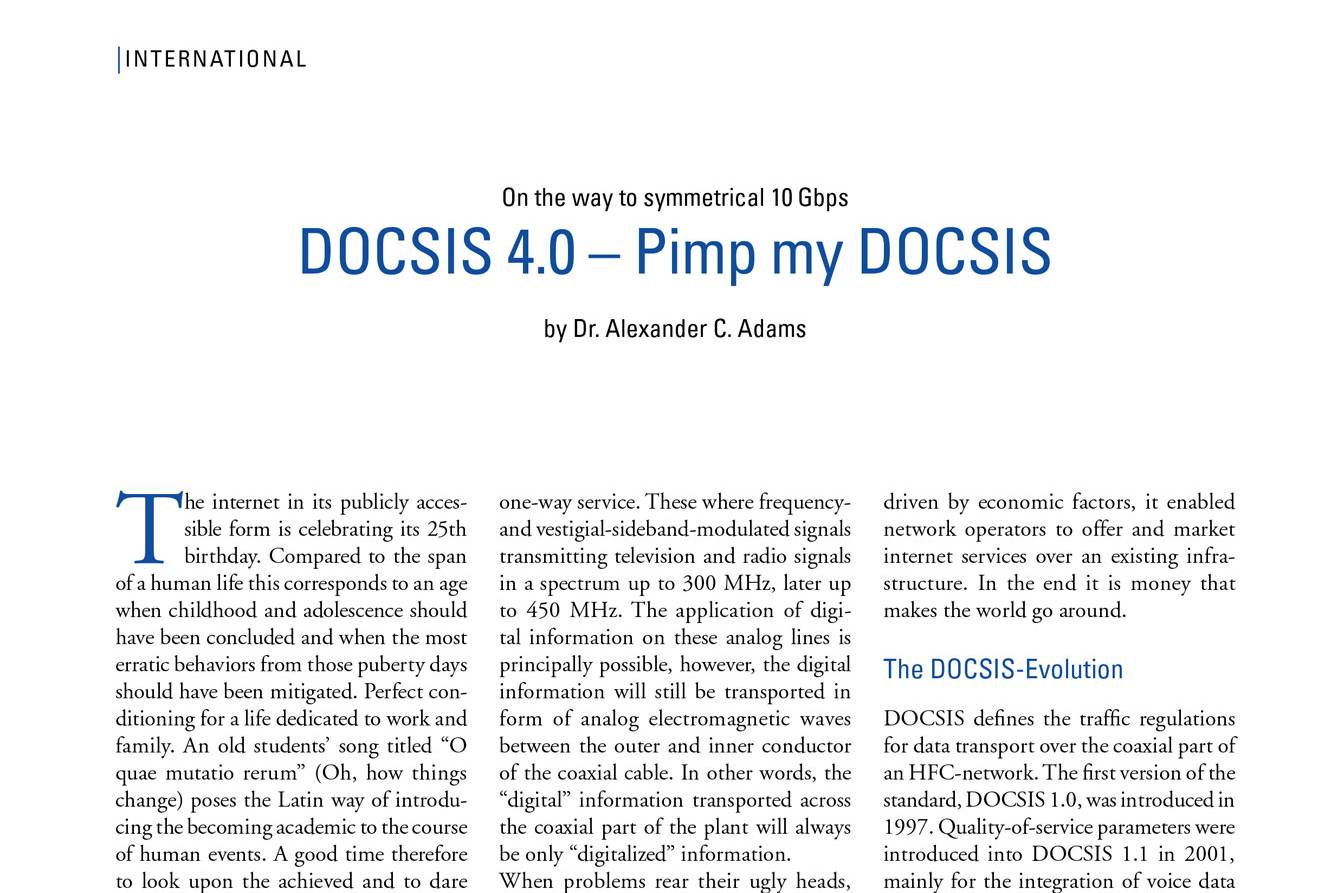
DOCSIS 4.0 – Pimp my DOCSIS
Find out all about the advanced DOCSIS 4.0 standard in this article. I look at the technical innovations that distinguish this standard from its predecessors and provide an outlook on future developments in the field of…